
Daily Cybersecurity News – December 15, 2025
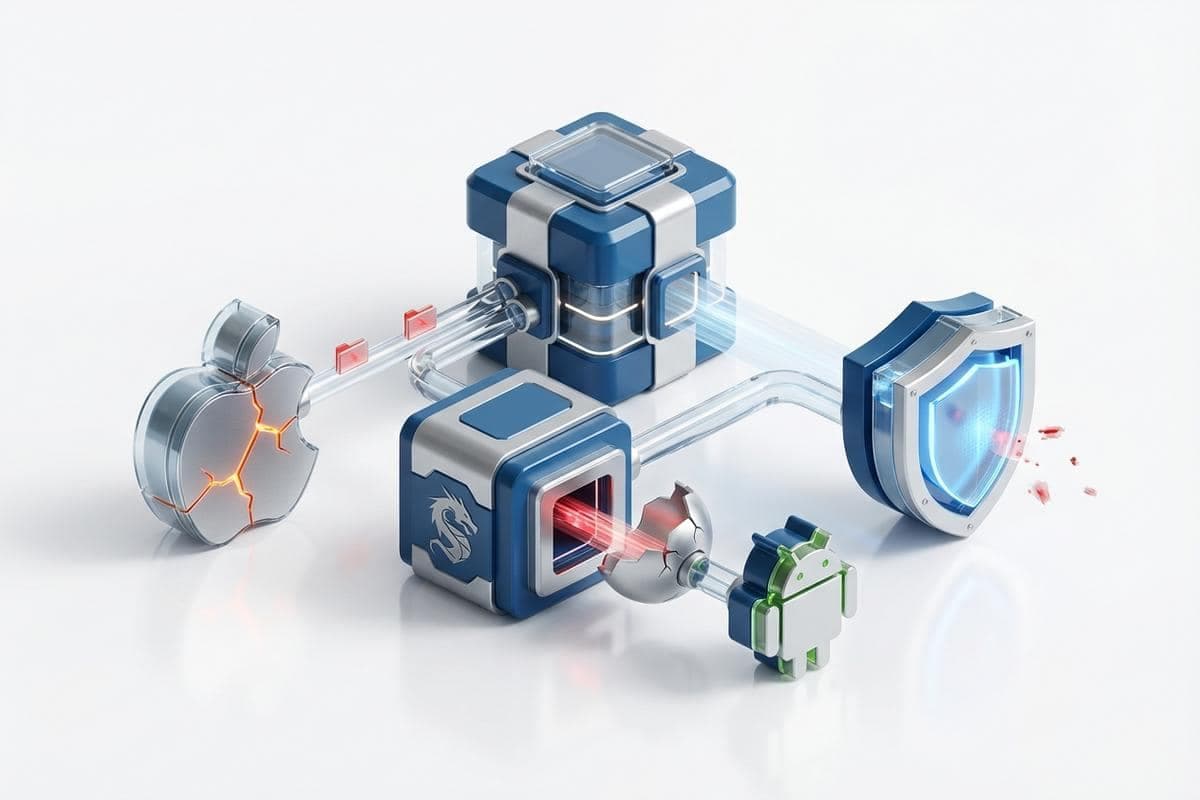
Apple Patches Two Actively Exploited WebKit Zero-Day Vulnerabilities
CriticalExecutive Summary
Apple has released urgent updates for macOS and iOS to address two actively exploited WebKit zero-day vulnerabilities: CVE-2025-43529 and CVE-2025-14174. These flaws were leveraged in sophisticated attacks, posing a severe risk of arbitrary code execution and memory corruption.
Vulnerability Details
- Affected Product: macOS, iOS, iPadOS, Safari, tvOS, watchOS, and visionOS (WebKit)
- Identifier: CVE-2025-43529
- CVSS Score: 9.8 (Critical)
- Exploitation Status: Actively Exploited
- Identifier: CVE-2025-14174
- CVSS Score: 8.8 (High)
- Exploitation Status: Actively Exploited
Risk & Impact
- Triage: Immediate patching is critical to prevent potential compromise.
- Attack Vector: Exploitation occurs through processing maliciously crafted web content.
- Ease of Exploit: Exploitation is considered sophisticated, likely used in targeted attacks.
Action Plan
- Immediate Action: Upgrade to iOS 26.2, iPadOS 26.2, macOS Tahoe 26.2, tvOS 26.2, watchOS 26.2, visionOS 26.2, and Safari 26.2.
- Workaround: There are no known workarounds; patching is the primary mitigation.
- Detection: Monitor network traffic for suspicious activity and review WebKit logs for anomalies.
Relevant professional terms
- Blue Team
- A group responsible for defending an organization's systems and networks by maintaining its security posture against attackers. They identify security threats and risks, analyze the network environment, and provide mitigation techniques.
- SOC Analyst
- A cybersecurity professional who works in a Security Operations Center to monitor, analyze, and respond to security incidents. Their main goal is to prevent attacks on a network by monitoring for suspicious activities and investigating potential threats.
React2Shell RCE Exploitation by Chinese APTs
Executive Summary
Multiple Chinese state-sponsored hacking groups are actively exploiting the React2Shell Remote Code Execution (RCE) vulnerability (CVE-2025-55182) to target vulnerable systems. This exploitation poses an immediate and severe risk, requiring prompt patching and enhanced threat hunting.
Key TTPs
- Initial Access: Exploitation of React2Shell vulnerability (CVE-2025-55182) via crafted HTTP requests to server function endpoints.
- Execution: Remote code execution on the server through unsafe deserialization of payloads.
- Defense Evasion: Some automated tools use user agent randomization to deter detection.
Campaign Analysis
The React2Shell vulnerability allows attackers to inject arbitrary objects that are then deserialized in privileged server contexts. Public PoC exploits have surfaced, leading to widespread exploitation attempts, including the deployment of Sliver implants.
Targeting & Infrastructure
- Target Profile: Organizations using React Server Components, Next.js, and related frameworks are at risk.
- Infrastructure: Exploitation involves scanning and active attempts from various IPs, including those associated with Asian-nexus threat groups.
Actionable Intelligence
- IPs: [
Observed IPs attempting exploitation are being tracked, refer to threat intelligence feeds for updated lists]
Relevant Terms
- RCE (Remote Code Execution): The ability to execute arbitrary code on a target system from a remote location.
- APT (Advanced Persistent Threat): A sophisticated, long-term cyberattack campaign conducted by state-sponsored or state-affiliated actors.
Frogblight Trojan Targets Turkish Android Users
Executive Summary
Frogblight is a newly discovered Android banking Trojan targeting Turkish users through social engineering. The malware disguises itself as a government application to steal banking credentials and personal data.
Key TTPs
- Initial Access: Smishing campaigns distribute the malware, posing as court case file access.
- Execution: The malware opens a legitimate government website in a WebView, prompting users to sign in and capturing credentials via injected JavaScript.
- Defense Evasion: Frogblight uses official government websites as intermediaries to steal banking credentials.
Campaign Analysis
Frogblight is under active development, with potential to evolve into a Malware-as-a-Service (MaaS) platform. It uses both REST API and WebSocket connections to communicate with its C2 server.
Targeting & Infrastructure
- Target Profile: Primarily targets individuals in Turkey.
- Infrastructure: Utilizes a web panel for operators to authenticate and monitor infected devices.
Actionable Intelligence
- Hashes:
MD5 115fbdc312edd4696d6330a62c181f35,MD5 9dac23203c12abd60d03e3d26d372253
Relevant Terms
- Smishing: A form of phishing that uses SMS messages to trick victims into revealing sensitive information or installing malware.
- MaaS: Malware-as-a-Service, a business model where malware developers lease their malware to other actors.
NCSC Guidance on Malware and Ransomware Mitigation
Executive Summary
The NCSC has released actionable guidance for organizations to defend against malware and ransomware, providing strategies for Blue Teams and SOC analysts to improve defenses and incident response. Red Teams can also use this to enhance attack simulations by understanding common organizational defenses.
Key Findings
- The guidance helps organizations prevent malware infections and provides steps to take if already infected.
- Organizations should disable Remote Desktop Protocol (RDP) if not needed and enable MFA at all remote access points.
- The guidance emphasizes reducing the likelihood of infection and limiting the spread and impact of malware.
The Bottom Line
This guidance is crucial for organizations seeking to bolster their cybersecurity posture against evolving malware and ransomware threats. By implementing the recommended strategies, organizations can significantly reduce their attack surface, improve incident response capabilities, and minimize the potential damage from successful attacks. Proactive adoption of these best practices is essential for maintaining operational resilience and protecting sensitive data.
Relevant Terms
- Blue Team: A group responsible for defending an organization's information systems by maintaining its security posture.
- SOC Analyst: A cybersecurity professional who works in a security operations center to monitor, analyze, and respond to security incidents.