

Fast Flux
Fast flux is a technique in the Domain Name System (DNS), the internet's lookup service, in which one domain name keeps resolving to a changing set of IP addresses, usually compromised computers that pass traffic on to a hidden server. Because other addresses can still answer for the name, blocking one address does not by itself take the domain offline.
In April 2025 the US agencies NSA, CISA and the FBI, joined by agencies in Australia, Canada and New Zealand, warned that many networks have a gap in their defenses for detecting and blocking fast flux. Their advisory asked service providers to help close it.
CyberRecaps is supported by its readers. We may earn an affiliate commission at no extra cost to you if you buy through a link on this page.


Explain It Like I'm 10
Picture an online game with a private room that everyone in your class knows by name. The name never changes, but the room keeps hopping onto other players' consoles, and each console quietly passes messages along to the real host hiding behind it. Some of those players never agreed to help. When a moderator kicks one console out, the room pops up on another one under the same name. Fast flux works roughly like that: the name stays the same while the machines answering for it keep changing.
Fast Flux Quiz
Test your knowledge about Fast Flux - maybe you already know everything about it.
What does fast flux primarily change behind one domain name?
How fast flux works
Before a device can reach a site by name, something has to turn the name into an address. Five terms carry the rest of this page:
- DNS: the Domain Name System, which connects a domain name to an IP address, the network address that tells the internet where to deliver traffic. A device can use more than one address, and addresses can change over time.
- Authoritative name server: the server that answers for a domain from the domain's own records.
- Resolver: the program that asks the authoritative name servers for an answer and receives it, as the DNS terminology standard describes it.
- A record: the record that holds an IPv4 address; the AAAA record does the same for IPv6, the other version of IP addresses.
- TTL: short for time to live, the longest time a resolver may reuse a saved (cached) answer before it should ask again. It does not change any address itself, and it does not force a new lookup the moment it runs out.
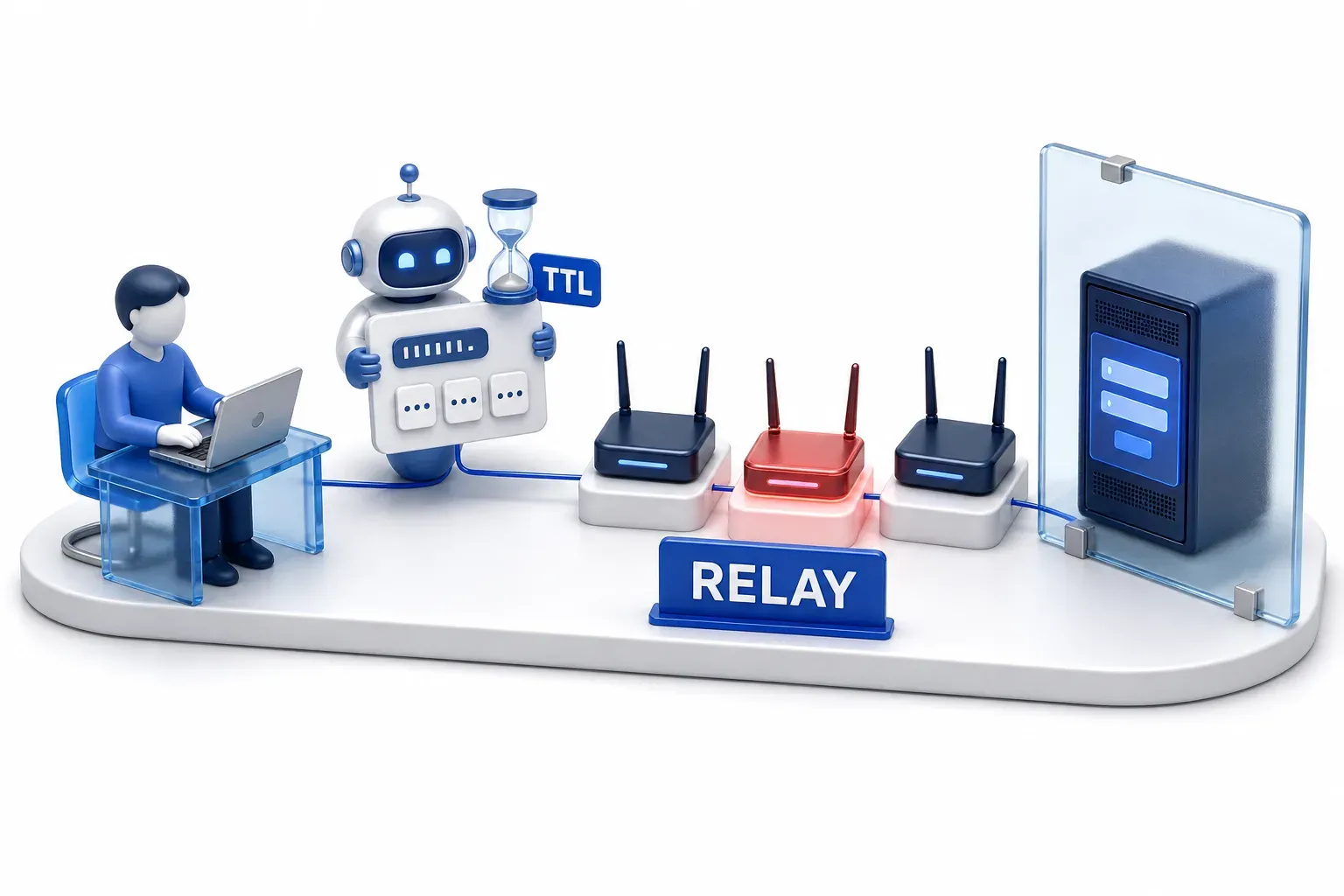
An operator controls a domain name and has a large pool of addresses to draw on. Usually those addresses belong to a botnet, a network of compromised computers, meaning machines running software their owners never agreed to install. The operator keeps changing which of those addresses appear in the domain's A records and gives each answer a very short TTL, so a resolver may reuse an answer only briefly before it should ask again. One answer can list several addresses, and the list changes from one answer to the next while successive lists can overlap.
The computers behind those addresses commonly act as relays: they forward visitors' traffic to a back-end server that stays out of sight. That server holds the real content, such as a phishing page (a fake page built to trick visitors), or is the operator's command and control (C2) server, the system used to send instructions to compromised machines.
What it can look like
Suppose an operator runs a fake sign-in page behind a fast flux domain. A company's security team notices traffic to one address and blocks it. That address belonged to a home router someone had taken over, one relay among many. The next employee who clicks the link gets an answer that lists other addresses, and one of them is a different router that forwards the request to the same hidden server. The fake page loads as if nothing had been blocked.

Fast flux in depth
Fast flux works because addresses are cheaper to replace than names. The pyramid of pain, a model of how costly each kind of evidence is for an attacker to replace, rates IP addresses as "Easy" to change and domain names as "Simple": a domain has to be registered, paid for and hosted, so it is slightly harder to replace. Fast flux spends the cheaper resource to protect the costlier one. The costlier one can still be replaced, so a campaign does not have to keep one domain forever.
Is fast flux the same as a CDN?
Not by rotation alone. The misreading is that quickly changing addresses and a short TTL mean fast flux. A content delivery network (CDN) is a distributed set of cooperating servers that deliver content to users, often from saved copies, and its addresses can change quickly too.
The April 2025 joint advisory says this kind of rotation "can also be used for legitimate purposes for performance reasons in dynamic hosting environments, such as in content delivery networks and load balancers" (systems that share requests among servers).
Telling the two apart takes several signals together, then evidence of malicious activity. In 2009 a working group of ICANN, the body that coordinates the internet's names and numbers, defined a fast flux attack network for its own purposes by characteristics that include:
- Compromised machines: some, though not necessarily all, of the network's machines run on compromised computers.
- Changing machines: the active machines keep changing, through DNS entries with low TTLs.
The group added other characteristics that help in combination, such as frequent name server changes and the age of the domain, and wrote that fast flux, when criminals use it, is not an attack itself but a way to avoid detection. Compromised machines are common in these networks, but they are one signal among several, not a test every case must pass.
What is double flux?
Single flux changes the addresses in a domain's A records. Double flux changes the authoritative name servers as well, which the advisory says adds another layer of redundancy and anonymity.
Variant | What changes | Why blocking one endpoint (an address or a name server) is insufficient |
|---|---|---|
Single flux | The addresses in the domain's A records | Blocking one address stops connections to it, but other addresses in the set can keep answering for the name |
Double flux | The A-record addresses and the authoritative name servers | Blocking one address or one name server leaves other addresses and name servers that can still answer |
Avalanche: a takedown of domains and servers
Avalanche was a criminal platform dismantled in an operation announced on 1 December 2016. The operation relied on sinkholing: redirecting a domain's traffic to servers controlled by law enforcement or a security company. The Shadowserver Foundation, a nonprofit that helped build that sinkholing infrastructure, describes Avalanche as a double fast flux platform involving more than 20 malware families that used multiple domain generation algorithms (DGAs), procedures that generate candidate domain names. A DGA and fast flux can coexist, because one generates candidate names and the other rotates the addresses behind a domain, and Shadowserver's account of Avalanche is an example.
Domain action was a major part of a broader operation: Europol counted more than 800,000 domains seized, sinkholed or blocked, one combined figure, while Shadowserver lists 39 servers seized and 221 taken offline through abuse reports. The sinkholes cut the platform's users off from infected computers but did not clean them: the victims behind the sinkholes were still infected.
Does protective DNS stop fast flux?
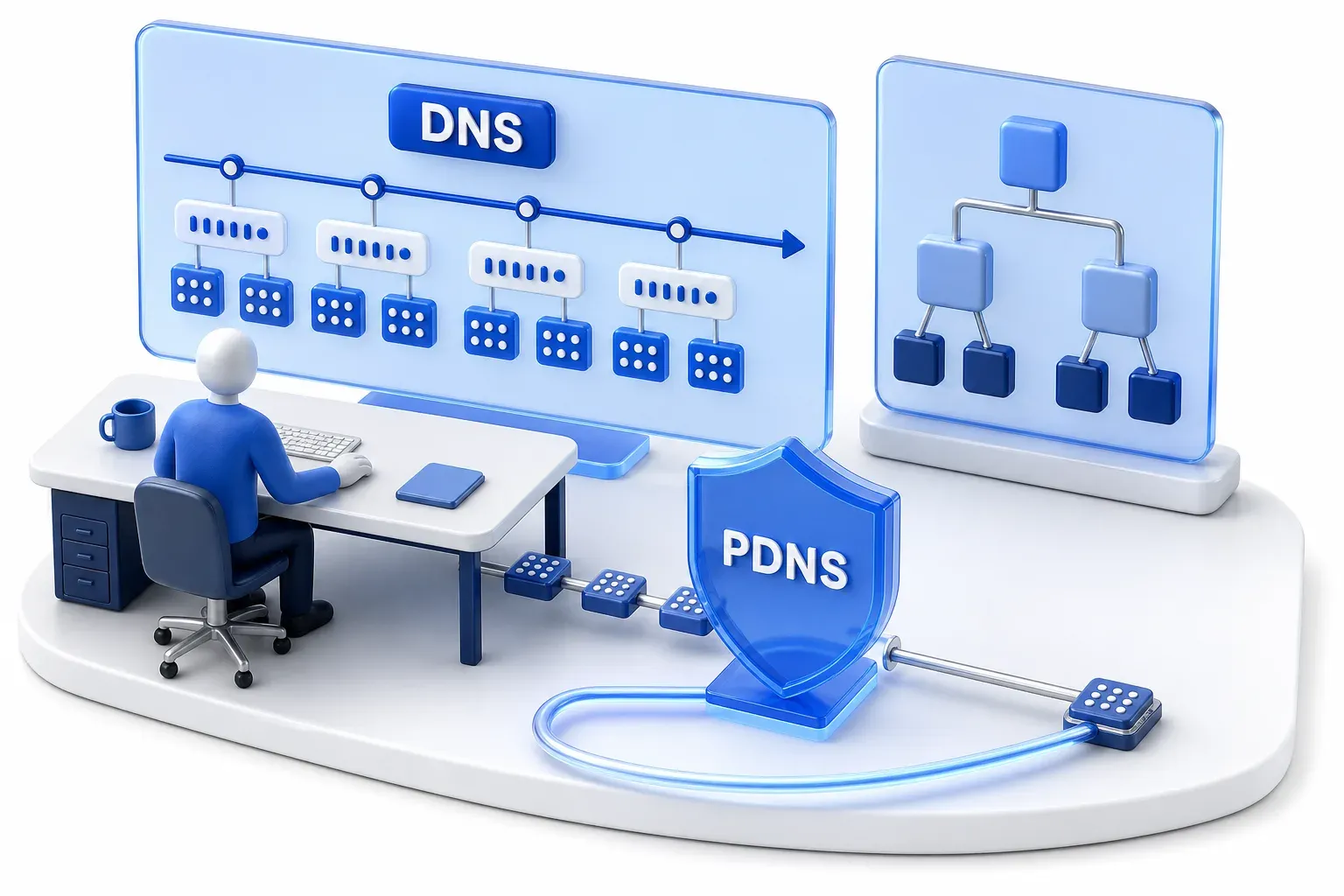
Protective DNS (PDNS) is a resolver that checks each lookup against information about known threats and, on a match, blocks, redirects or sinkholes the answer and sends an alert, as the US government's own PDNS service describes it. The authoring agencies encourage the use of PDNS services that detect and block fast flux, but some providers may not, so organizations "should not assume" their provider blocks it automatically and should contact it to confirm coverage.
PDNS also acts only on the lookups sent to it. Traffic that connects to an IP address directly, or that resolves names through a different resolver, does not pass through its filter, so PDNS is one layer of defense, not the whole of it.
What fast flux is not
- A domain generation algorithm: it computes candidate domain names from an algorithm the attacker's software shares with its infrastructure; fast flux keeps one name working by changing the addresses behind it, and the two can be combined.
- DNS tunneling: it carries the attacker's communication inside DNS traffic itself; fast flux uses DNS to stay reachable, not to carry the data.
- Domain fronting: it takes advantage of the routing of a CDN, or another service that hosts many domains, to obscure where encrypted web traffic is really going; fast flux instead changes the addresses behind a domain the operator controls.
Fast flux for practitioners
MITRE ATT&CK, a public catalogue of attacker techniques, files the technique as T1568.001 Dynamic Resolution: Fast Flux DNS, a sub-technique of T1568 under the Command and Control tactic, the group of techniques for communicating with compromised systems.
Its description: "Adversaries may use Fast Flux DNS to hide a command and control channel behind an array of rapidly changing IP addresses linked to a single domain resolution." Its procedure examples include Gamaredon Group, TA505 and the Amadey malware.
How do defenders detect fast flux?
MITRE's detection strategy DET0485 carries four analytics, each watching the same pattern from a different vantage point. They are patterns to investigate, not conditions every fast flux domain must meet and not detections any product is guaranteed to make.
Analytic | What it watches |
|---|---|
AN1331 | One name returning multiple IPs in short succession, low TTLs, high query volume from unusual processes, correlated with process lineage (which program started which) |
AN1332 | Resolver logs and Linux audit logs: names resolving to rotating IPs within very short TTLs, high query rates from non-browser applications |
AN1333 | Operating-system logs of processes issuing repeated DNS queries whose resolved addresses change frequently |
AN1334 | ESXi (VMware's server virtualization software) logs: frequent domain-to-IP changes or unauthorized changes to management agents' DNS settings |
The joint advisory adds the network view: short TTLs, frequent address changes, many scattered addresses, reputation lists, inconsistent location data for the addresses, and flow data, which records which addresses a device contacted. It says a typical fast flux domain "may change its IP address every 3 to 5 minutes", but also that "quickly detecting malicious fast flux activity and differentiating it from legitimate activity remains an ongoing challenge."
The records behind these signs hold different things. A log of DNS queries shows which name was asked for and by which device; a log of DNS responses also holds the returned addresses and their TTLs, and address churn generally shows only in response history gathered over time. Linking a lookup to a program takes endpoint telemetry (records kept on the device itself) or correlation with other logs. Several of these signals share one limit: legitimate CDN activity can look similar, which is why the advisory asks providers to allowlist expected CDN services, meaning exempt them from blocking.
How can defenders mitigate fast flux?
The framework is candid about prevention: the technique "cannot be easily mitigated with preventive controls since it is based on the abuse of system features." The advisory's mitigations are DNS and IP blocking and sinkholing of malicious fast flux domains and addresses, reputational filtering (blocking domains or addresses with a poor reputation), enhanced monitoring and logging, collaborative defense and information sharing, phishing awareness and training, and protective DNS, with the coverage check and the resolver limit described in the depth section.
What a red-team exercise tests
A red-team exercise (a planned, authorized simulation of an attack) that emulates T1568.001 tests whether defenders can see and interpret address churn for the chosen scenario. A fast flux phishing visit can come from an ordinary browser, so a single device need not show high query volume or contact many members of the address pool. Seeing churn generally takes DNS response history over time, and process information from the device and its network connections help interpret that history where they exist. Success means validated visibility, correlation and the expected controls for that scenario, for example whether protective DNS flags the name. Address rotation alone is not a malicious verdict.
A June 2026 case: one network, measured
In June 2026, Resecurity published a measurement of the fast flux network behind a data theft and extortion group it tracks. For the two domains it studied, each DNS answer returned 10 to 18 addresses, and every node it found traced back to a consumer internet provider and was flagged as residential or mobile, with no datacenter or hosting addresses. Resecurity read these as home internet connections, not load balancers or CDN nodes, and wrote that the bots are likely infected routers and similar equipment.
The residential or mobile flag supported the investigation; it does not prove that each device was compromised. The finding describes this infrastructure only. It is not a rule that a datacenter address is safe or that a residential address means fast flux.
What to remember about fast flux
Fast flux keeps one domain name working by changing the set of addresses that answer for it, usually compromised computers acting as relays, though not always. Rotation alone does not make a domain malicious: a CDN rotates addresses too, and classification takes several signals plus evidence of malicious activity.
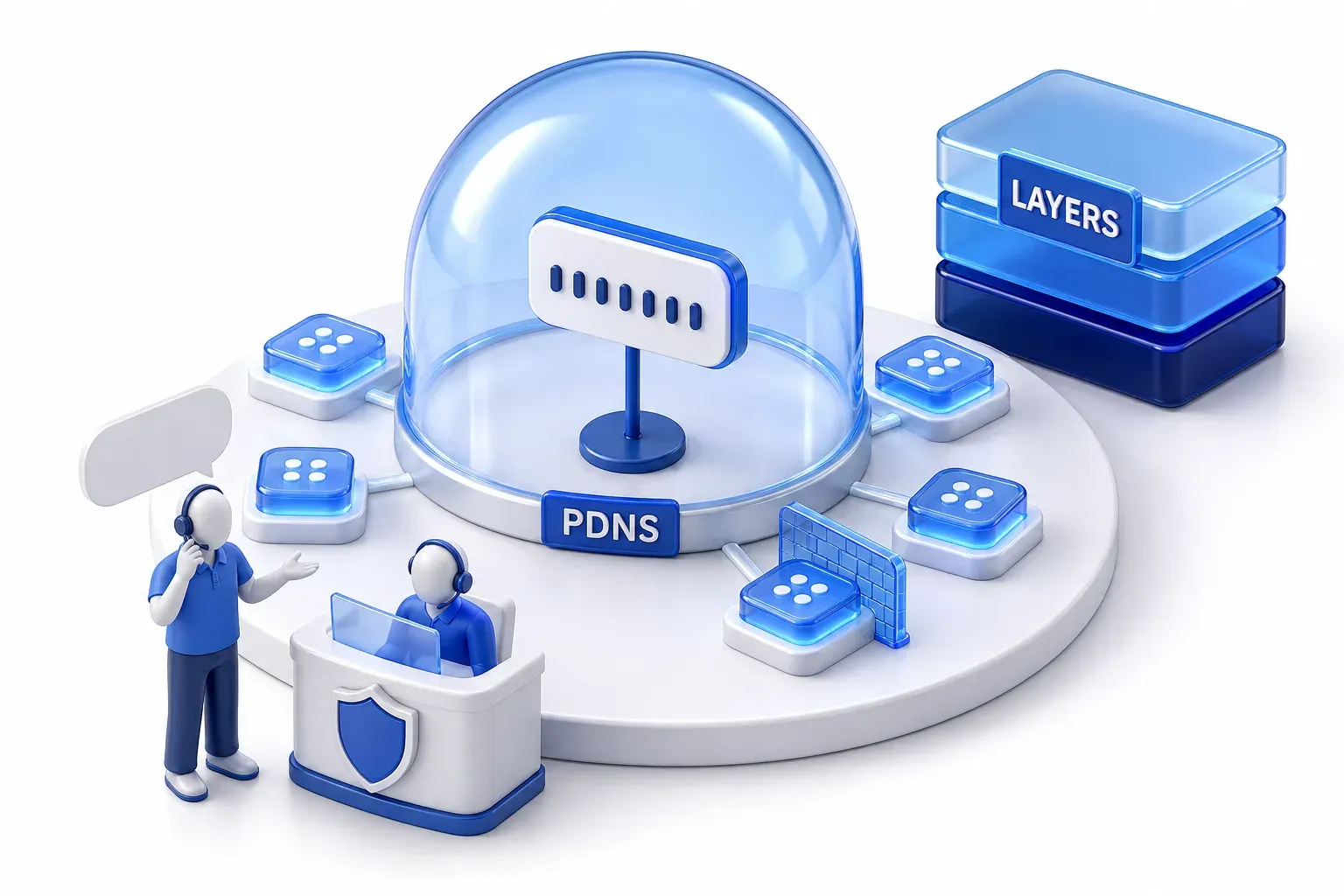
Defense is layered. Blocking one address stops connections to it but leaves the rest of the pool; domain-based controls such as protective DNS and sinkholing act on the name, and only for lookups that pass through them. The practical step for an organization is the advisory's: ask your protective DNS provider whether it covers fast flux instead of assuming it does, and keep address blocking, monitoring and information sharing alongside it.