
Daily Cybersecurity News – November 15, 2026
CyberRecaps is supported by its readers. We may earn an affiliate commission at no extra cost to you if you buy through a link on this page.

CISA Adds Actively Exploited UnrealIRCd Flaw to KEV
HighWhat happened
CISA added CVE-2026-114713 affecting UnrealIRCd to its Known Exploited Vulnerabilities catalog after confirmed active exploitation.
The high-severity flaw (CVSS 8.6) is improper neutralization of delimiters in the labeled-response module. UnrealIRCd 6.0.0 before 6.2.7.1 fails to escape the IRCv3 label message tag when echoing replies. Any user on a network with two or more linked servers can inject server-to-server commands that run with server or IRCOp privileges.
UnrealIRCd 6.2.7.1 was released around November 7, 2026 to fix it (and other issues). Exploitation began the next day. The project maintainer called it the most critical issue in 15 years and urged immediate patching or a spamfilter workaround.
Who is affected
Operators running UnrealIRCd versions 6.0.0 through 6.2.7.0, especially multi-server linked IRC networks.
Any user able to join such a network can trigger the injection. Federal Civilian Executive Branch agencies face a Binding Operational Directive deadline of November 16, 2026.
Why it matters
Successful exploitation gives attackers server-level command execution, enabling full control of the IRC server, lateral movement across linked servers, eavesdropping, or further network compromise.
IRC remains widely used in open-source, gaming, and community infrastructure. Active exploitation shortly after the fix means unpatched instances are already under attack.
How it could have been prevented
Upgrade immediately to UnrealIRCd 6.2.7.1 or later.
If an upgrade is delayed, deploy the maintainer-recommended spamfilter workaround and monitor for anomalous server-to-server commands. Restrict who can connect and limit linked-server topologies where practical. Apply the BOD 26-04 timeline for FCEB systems.
Relevant professional terms
- KEV catalog
- CISA’s list of vulnerabilities that are confirmed to be actively exploited in the wild, which federal agencies must patch on a short deadline.
- Delimiter neutralization failure
- A parsing flaw in which special separator characters in protocol tags are not properly escaped, letting an attacker break out of the intended data field and inject commands.
US Disrupts North Korean FaceStealer Crypto Theft Campaign
HighWhat happened
U.S. authorities disrupted the North Korean FaceStealer social-engineering campaign that stole more than $400 million in cryptocurrency over roughly 18 months.
Attackers hijacked accounts on Telegram, LinkedIn, Slack, and Discord to lure crypto, Web3, and open-source targets into video calls. They played deepfake or previously recorded footage of people the victim knew, secretly recorded the new victim’s webcam, then claimed a technical glitch and pushed a malicious “fix” (ClickFix-style) that installed malware.
The malware stole crypto wallets and credentials, plus access to contacts, social apps, and meeting platforms (Zoom, Google Meet, Teams). Compromises were sometimes left dormant for months so holdings could grow. Researchers linked the activity to BlueNoroff; more than 900 secret webcam videos and hundreds of targets were identified. Cloud infrastructure supporting the operation was seized.
Who is affected
Individuals and organizations in cryptocurrency, Web3, and open-source development communities, plus anyone using the hijacked messaging and video platforms.
ArticWolf researchers noted hundreds of targets across dozens of countries. Anyone who accepted unsolicited video-meeting invites or ran “fix” installers from those chats was at risk.
Why it matters
Nation-state actors combined deepfakes, account takeovers, and delayed monetization to extract hundreds of millions while building reusable video libraries of victims.
The campaign shows how social engineering plus AI-generated or recycled video can defeat ordinary identity checks and turn trusted contacts into attack vectors. Crypto holders and developers remain high-value targets.
How it could have been prevented
Treat unsolicited video-call invites, especially those involving familiar faces under odd circumstances, with extreme skepticism. Verify the real person’s identity out-of-band before joining or sharing screens.
Never run “fix,” update, or installer links offered during a call. Use hardware wallets or offline cold storage for significant holdings, enable strong MFA everywhere, and monitor for unusual account activity on messaging and meeting apps. Report suspected deepfake or ClickFix lures to platforms and authorities.
Relevant professional terms
- Social engineering
- Manipulating people into taking unsafe actions or revealing information by exploiting trust, urgency, or familiarity rather than breaking software directly.
- ClickFix
- A social-engineering technique that presents a fake error or technical problem and then tricks the victim into running a purported fix that actually delivers malware.
Stolen Fireworks AI Key Trojanized Claude Extension
HighWhat happened
A stolen access key that Cursor had issued to Fireworks AI was exposed in a Fireworks breach and used to compromise Cursor systems, ultimately leading to a trojanized Anthropic Claude Code extension on the Cursor marketplace.
The attacker first copied data from a read-only storage bucket containing limited coding-agent traces (non-Privacy-Mode sessions). Some traces held unredacted credentials affecting under 0.01% of customers. Those credentials enabled further access to select SaaS tools, archived non-production source repos, limited support data, usage metrics, conversation summaries, and credentials users had sent to support.
On October 29, 2026 the attacker used a stolen internal credential to place malicious versions (2.1.312 and 2.1.313) of the Claude Code extension into the marketplace cache. The builds attempted to install a persistent SSH backdoor. The malicious versions were available for about 11 hours and could have reached at most roughly 5,000 users who requested those cached builds. Cursor removed them, took the marketplace offline, deactivated keys, rotated credentials, moved inference off Fireworks, and notified affected users.
Who is affected
Cursor users who installed Claude Code extension versions 2.1.312 or 2.1.313 from the marketplace during the short exposure window on October 29, 2026 (up to about 5,000 people).
A much smaller set of customers whose API credentials appeared in non-Privacy-Mode traces, plus anyone whose support tickets or related data were in the accessed sets. Cursor’s own internal and non-production systems were also touched.
Why it matters
A vendor access key and shared training-data bucket became the entry point for a supply-chain attack on a popular AI coding assistant, delivering a backdoor to developer machines.
Developers often grant extensions broad permissions; a malicious one can steal source, credentials, and access to further systems. The incident highlights third-party AI-provider risk and the danger of residual secrets in shared traces.
How it could have been prevented
Immediately rotate any credentials that may have been exposed and review systems for unauthorized SSH keys or backdoors if you installed the affected extension versions.
Enable Privacy Mode (or equivalent) so session data is not shared for training. Treat marketplace extensions as high-risk: pin versions, verify publishers, and monitor for unexpected network or persistence behavior. Vendors should minimize shared buckets, enforce least-privilege keys, redact secrets aggressively, and monitor for anomalous access to packaging or cache infrastructure.
Relevant professional terms
- Supply-chain attack
- An attack that compromises a trusted third-party component, update, or vendor relationship so that malicious code reaches many downstream users.
- Trojanized extension
- A legitimate-looking software add-on that has been covertly modified to include malware, often distributed through an official marketplace or update channel.
AI Tools Fuel New Ransomware Wave
HighWhat happened
Ransomware and data-extortion activity has risen sharply, with researchers estimating nearly 3,000 claimed attacks on leak sites over a recent summer period (roughly a 20-40% increase from spring levels in some tallies). The uptick is linked in part to attackers’ growing use of AI tools.
Fully automated end-to-end ransomware has not yet appeared at scale. Instead, operators use large language models to craft more convincing phishing emails, improve negotiation language, and lower the skill barrier for smaller or newer groups. Established human-operated crews remain dominant, but experimentation is heavy. International targeting has grown especially noticeable while U.S. volume stays high.
Groups such as Gentlemen, Qilin, and Akira have been among the more prominent recent operators; the broader ecosystem shows fragmentation and many emerging actors. AI-assisted scamming trends (for example, fluent foreign-language lures) are also feeding initial access for ransomware.
Who is affected
Organizations of all sizes across sectors, with particular pressure on international victims. Any entity reachable by phishing, exposed remote services, or weak identity controls can be targeted.
Smaller organizations may face relatively higher risk as lower-skilled actors gain AI help. Critical infrastructure and high-data-value firms remain perennial priorities for ransom and extortion.
Why it matters
AI reduces the cost and skill needed for effective phishing and victim communication, expanding the pool of capable attackers and increasing overall attack volume.
Even without full automation, the combination of classic ransomware tradecraft and AI-assisted social engineering keeps the threat elevated and more globally distributed. Builders and operators must assume phishing quality will keep rising.
How it could have been prevented
Harden initial-access paths: enforce phishing-resistant MFA, rapid patching of remote-access and edge devices, and email/web filtering tuned for AI-generated lures.
Maintain offline, tested backups and an incident-response plan that includes negotiation and law-enforcement coordination. Segment networks, limit lateral movement, and monitor for ransomware precursors (reconnaissance, credential dumping, anomaly in backup systems). Train staff on deepfake and high-quality social-engineering risks.
Relevant professional terms
- Ransomware
- Malware that encrypts a victim’s files or systems and demands payment, usually in cryptocurrency, for the decryption key or to prevent data leaks.
- Data extortion
- A tactic in which attackers steal sensitive data and threaten to publish or sell it unless a ransom is paid, often used alongside or instead of pure encryption.
Apple Details Secure Exclaves for Camera Microphone Data
LowHow it works
- Sensor data is processed only inside isolated Secure Exclave runtimes.
- Main OS receives solely approved metadata or recognition results, never raw audio/video for ambient features.
- Gatekeeper exclave confirms privacy indicator is active and visible before any full sensor release.
- On-screen indicators are cross-checked by an exclave that inspects actual display pixels.
- Runtime sits on a minimal, formally verified capability-based microkernel.
What happened
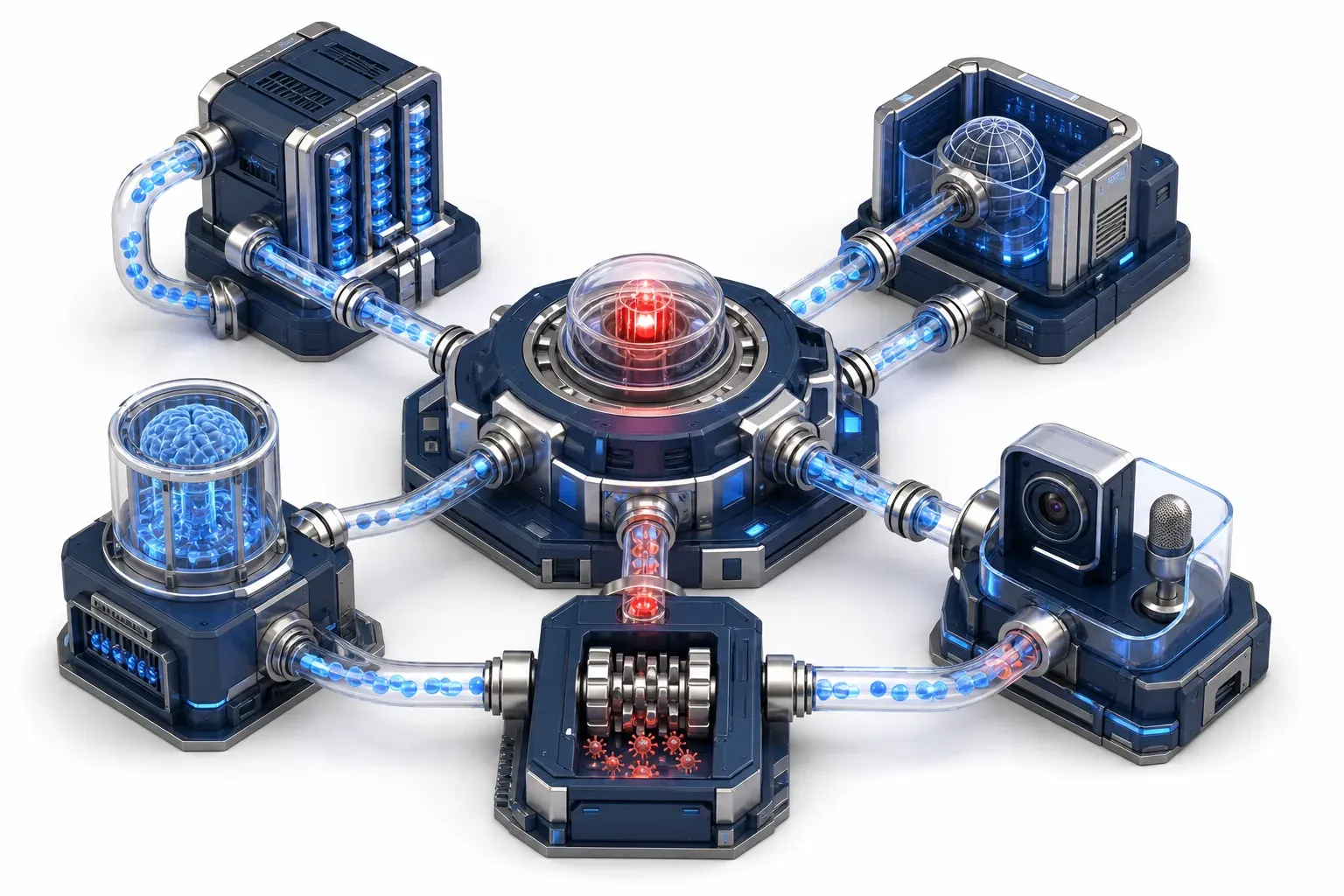
Apple published technical details on Secure Exclaves, a silicon-level architecture that keeps camera and microphone data used for ambient sensing isolated from the main operating system.
Secure Exclaves are isolated runtimes. Isolation features across core silicon components prevent the main OS, apps, or even Apple from accessing the raw sensor data processed inside them. Only narrowly defined metadata or results may cross the boundary, and users must be able to observe when a sensor session is active without OS interference.
On HomeView, face and voice recognition results sent outward are limited to a person identifier, position, and confidence score. When an app requests full access, a gatekeeper exclave releases data only after confirming the privacy indicator has been on long enough. On iPhone the on-screen indicator is itself verified by another exclave that checks actual displayed pixels. The exclaves run on a minimal capability-based microkernel that Apple is formally verifying.
Who is affected
Users of Apple devices that implement the architecture, including the HomeView smart display, iPhone 18 Pro, iPhone 18 Pro Max, iPhone Duo, MacBook Neo, and related products that rely on ambient camera or microphone sensing for features such as Hey Siri, person recognition, Siri Recap, and Live Rewind.
Why it matters
Ambient always-on sensing creates a large privacy surface. By design, raw audio and video never become available to the main OS or applications, reducing the blast radius of a compromised app or OS-level exploit.
Hardware-enforced isolation plus formal verification of the microkernel raises the bar for attackers seeking covert microphone or camera access and gives users stronger guarantees about indicator honesty.
Relevant professional terms
- Secure Enclave (related concept)
- A separate, hardened processor region that handles sensitive data (keys, biometrics, sensor streams) so the main operating system cannot directly read or tamper with it.
- Capability-based microkernel
- A minimal kernel that grants every resource access through explicit, unforgeable capabilities rather than ambient authority, making isolation and least-privilege enforcement easier to verify.