
BEC Attack (Business Email Compromise)
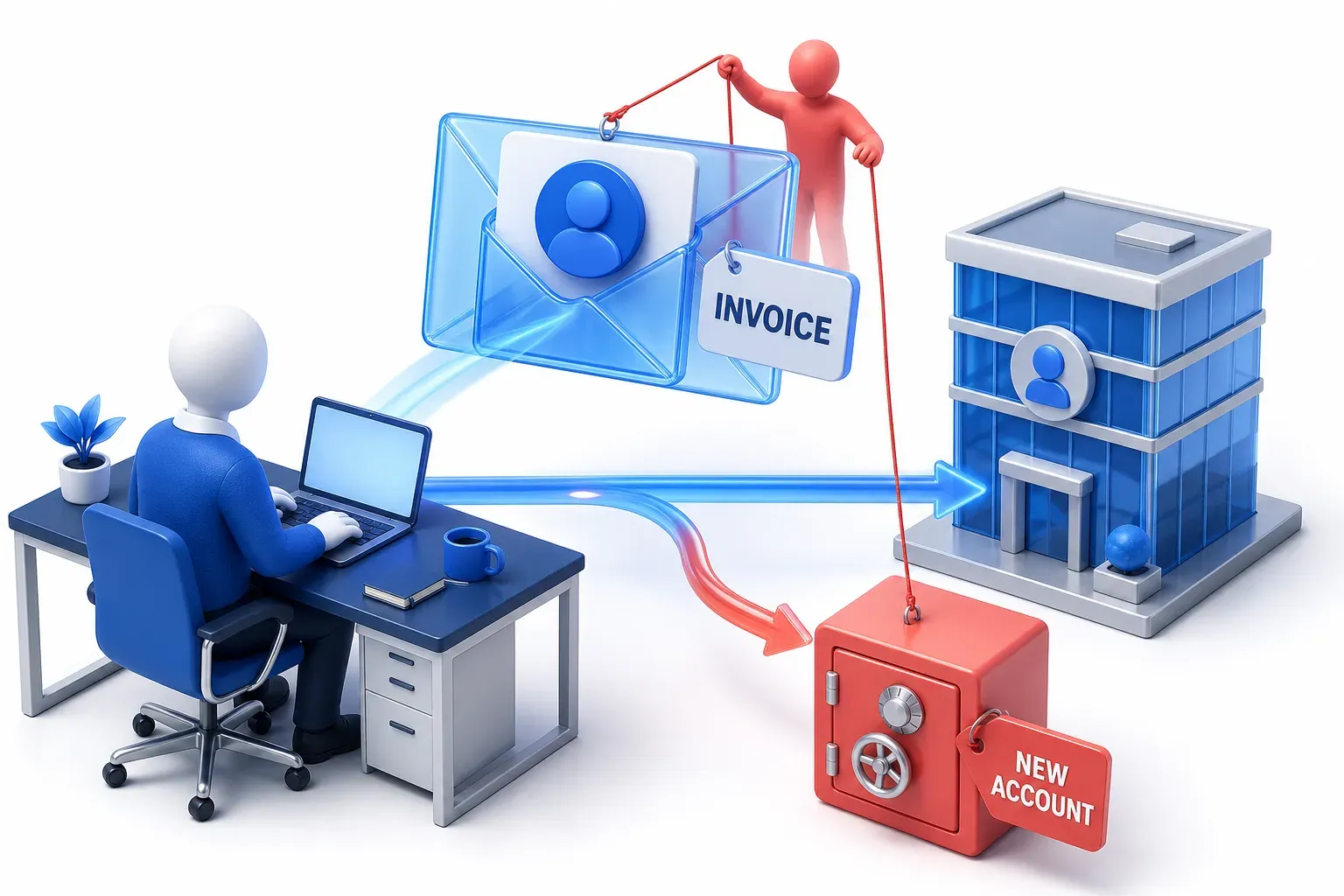
A business email compromise (BEC) attack is a fraud in which a criminal impersonates a trusted person, or uses a compromised account, to persuade someone at an organization to send money or change where payments go. The request often looks like ordinary work, and it can come from a real account that someone else controls.
A BEC attack can arrive as an email that reads like routine business, such as an invoice, new bank details or an urgent request from a manager. A phone call or a virtual meeting can accompany or replace the email.
CyberRecaps is supported by its readers. We may earn an affiliate commission at no extra cost to you if you buy through a link on this page.


Explain It Like I'm 10
Your class sells snacks at the school fair, and the money always goes to Sam, the older student who runs the club. One morning a message pops up in the class group chat. It has Sam's name and picture, and it tells the class to give today's money to Sam's friend Alex instead. It looks like every other message from Sam, so someone does it.
But Sam never sent it. Either a stranger made an account that looks like Sam's, or someone got into Sam's real account. Either way, the money went to the wrong person, because the request looked trusted and nobody checked it with Sam in person.
BEC Attack Quiz
Test your knowledge about BEC Attack - maybe you already know everything about it.
What is the main aim of a BEC attack?
What is a BEC attack, and how does it work?
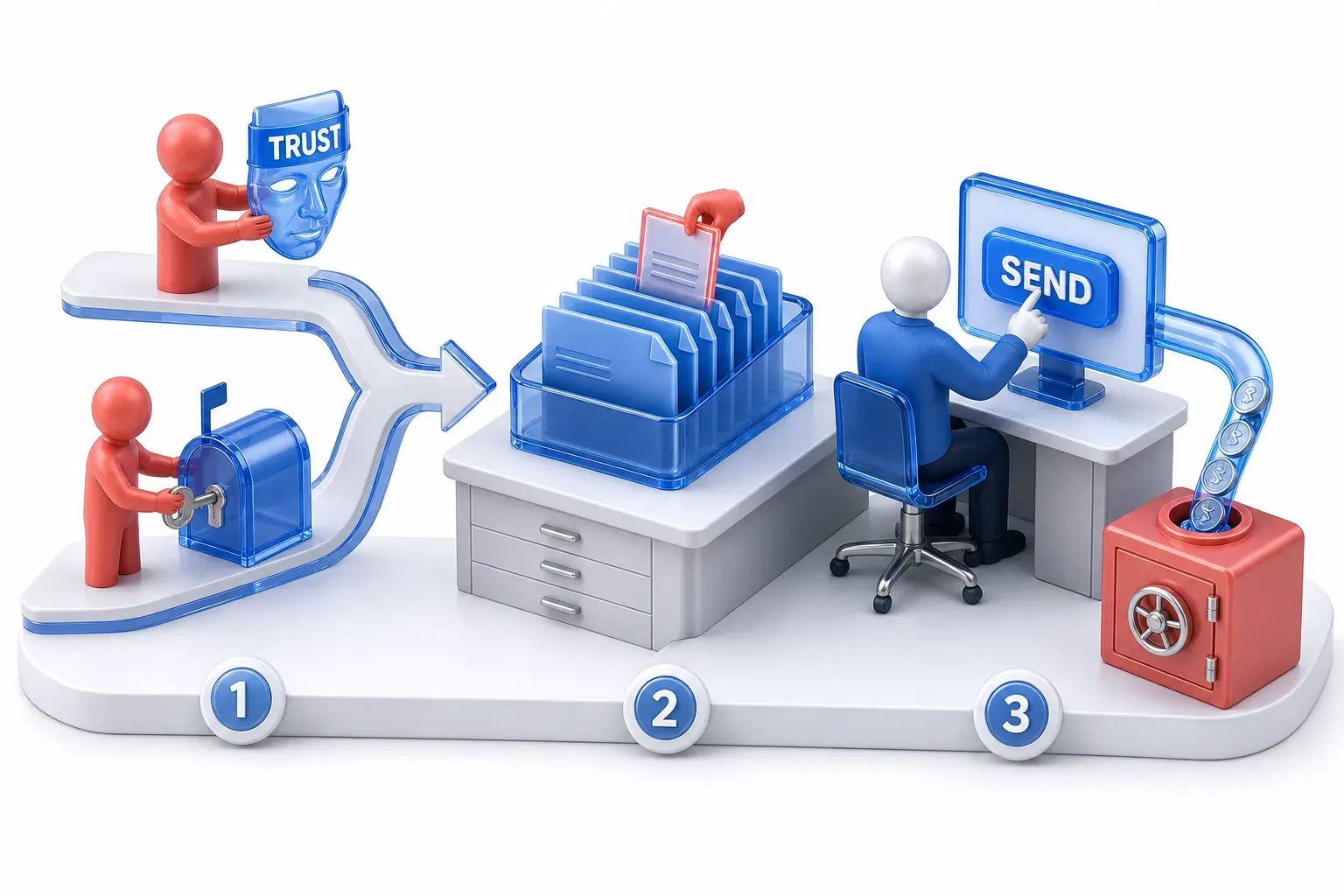
A BEC attack runs on borrowed trust. The attacker impersonates a trusted party, such as an executive, a colleague or a supplier, or takes over a real account that the party uses. The attacker then puts fraudulent payment instructions into a believable business context, such as an invoice, a pending payment or a routine approval. Finally, the attacker persuades someone to act, and the money goes to an account the criminal controls.
Two routes to a trusted identity
Two routes can supply that trusted identity, and they can be combined. In impersonation, the attacker pretends to be the person, for example with a sender name or address that looks right. In account compromise, the attacker first gets into a real account, for example through phishing, and the FBI's definition lists social engineering and computer intrusion techniques as the ways in. From a real mailbox the attacker can write as a real contact, and an account taken over at one organization can be used to impersonate that organization to others.
A clean request does not mean no intrusion
The payment request itself may contain no malicious link or attachment. That does not show that the wider operation involved no intrusion. The criminals may have used phishing or another method earlier to get into email systems and learn about the company, and then sent a request that looks clean. Some attacks do carry malware: the UK's National Cyber Security Centre (NCSC) describes an invoice that looks real but contains a virus.
Who can help the fraud succeed
The person who is tricked does not have to be someone who can release a payment alone. Someone who changes supplier records, hands over names and contact details, or influences an approval can also help the fraud succeed. MITRE, which maintains the ATT&CK catalogue of attacker techniques, describes campaigns of this kind as often targeted at people who, because of their job role or access, can carry out the attacker's goal.
Common forms
- Executive or colleague impersonation: a request for a payment that appears to come from someone with authority.
- Supplier impersonation: an invoice, or a message saying a supplier's bank details have changed.
- A taken-over account used against its contacts: one organization's compromised account is used to impersonate that organization to others.
How BEC relates to phishing, phone calls and meetings
BEC campaigns are often targeted. Spear phishing is phishing aimed at a chosen person or organization, and MITRE says an adversary impersonating a known sender may contact victims by phishing. What marks BEC is its goal, a payment or a change to payment details, which a message with no link can achieve.
The FBI's definition says fraudsters may compromise other forms of communication too, such as phone numbers and virtual meeting applications, so a call or a meeting can support the fraud as well as email. In the case below, calls collected information and made the request itself. Voice-based scams have their own glossary entry: vishing, or voice phishing.
What does a real BEC case look like?
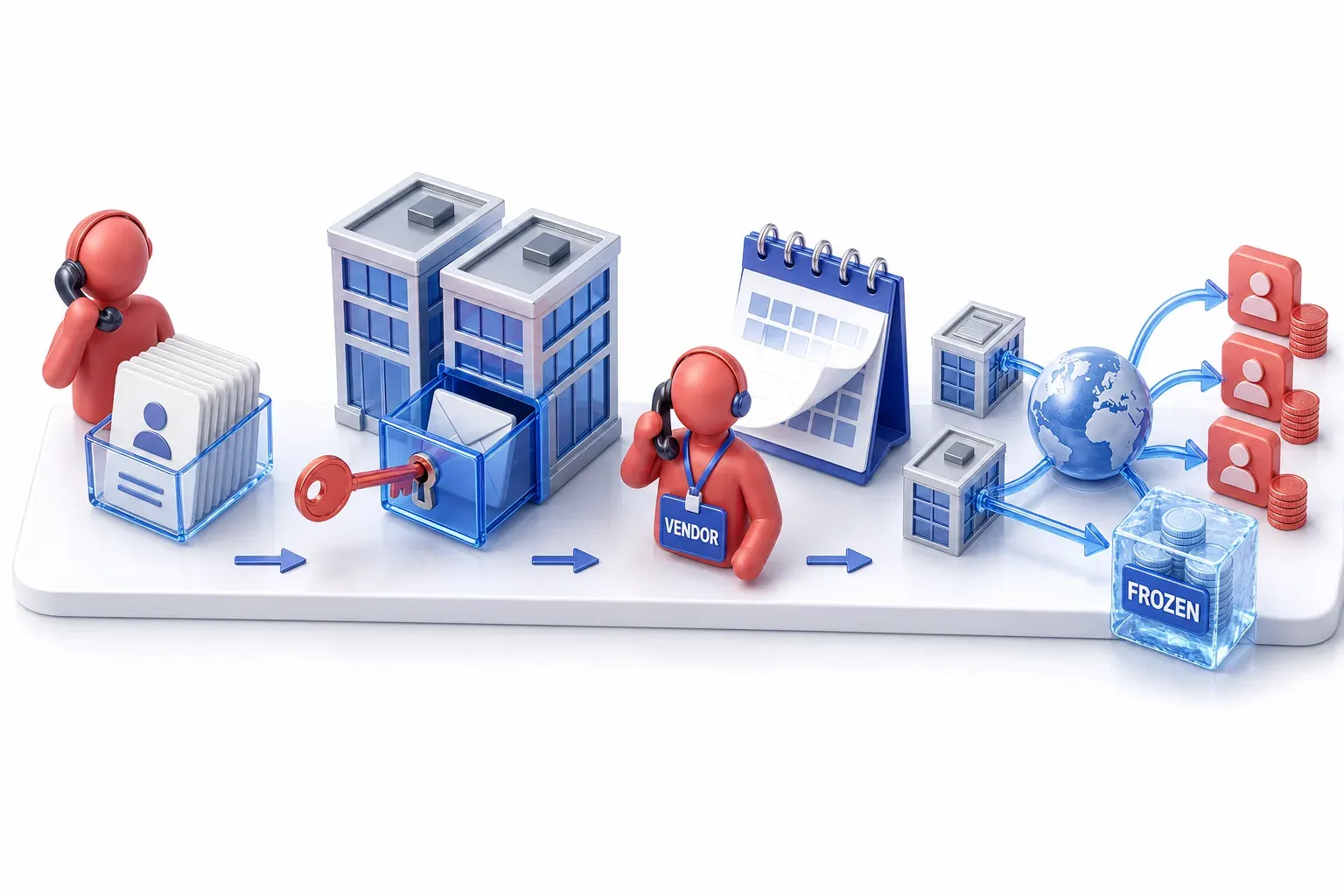
The FBI's January 2020 account of the Rimasauskas case shows how the parts fit together. Evaldas Rimasauskas was one of the orchestrators of a Lithuania-based scheme, run by an international criminal network, that stole millions of dollars from two American businesses while pretending to be a legitimate vendor.
The research came first
From 2013, Rimasauskas's employees regularly called the two companies' customer service numbers to collect the names of key employees and their contact details. They also sent phishing emails that gave them access to the companies' email systems and a larger store of information about the companies. After two years of research, one of the fraudsters called each company, pretended to be a vendor and said the bank account for an upcoming payment should change.
The payments and the response
The companies then wired several payments to accounts the fraudsters controlled, which added up to more than $120 million. Rimasauskas set up those accounts and moved the money on around the world. The companies reported the intrusions to the FBI, and investigators froze some of the funds before they could be moved. Rimasauskas pleaded guilty to wire fraud charges and was sentenced to five years in prison.
What the case shows
- The decisive request was a phone call: it was not an email with a link.
- It followed earlier calls and email intrusions: these had supplied names, contacts and information about the companies.
- Reporting to the FBI mattered: investigators froze some of the funds before they could be moved.

How common is BEC, and what does it cost?
In 2025, the FBI's Internet Crime Complaint Center (IC3), which takes public reports of cyber-enabled crime, received 1,008,597 complaints reporting $20.877 billion in losses. Business email compromise accounted for 24,768 of those complaints and $3,046,598,558 in reported losses. The report ranks investment fraud first by losses, followed by BEC and tech support scams.
Measure, 2025 | BEC | All complaints to IC3 | Basis |
|---|---|---|---|
Complaints | 24,768 | 1,008,597 | Published in the report |
Reported losses | $3,046,598,558 | $20.877 billion | Published in the report |
Share of complaints | about 2.5% | 100% | Calculated from the totals |
Share of reported losses | about 15% | 100% | Calculated from the totals |
Average loss per complaint | about $123,000 | $20,699 | BEC figure calculated; overall figure published on page 6 |
On those numbers, BEC makes up about one complaint in 40 and about one dollar in seven of the reported losses. Its average of about $123,000 per complaint is roughly six times the overall average.
These figures count complaints and the losses people reported in them. IC3 received complaints from more than 200 countries in 2025, but the figures measure what was reported, not how common BEC is worldwide. IC3 notes that its BEC count includes some complainants aged 60 or over who may be reporting for a business or personally. An average is an arithmetic mean, so it is not a typical victim's loss.
What are the warning signs of a BEC attack?
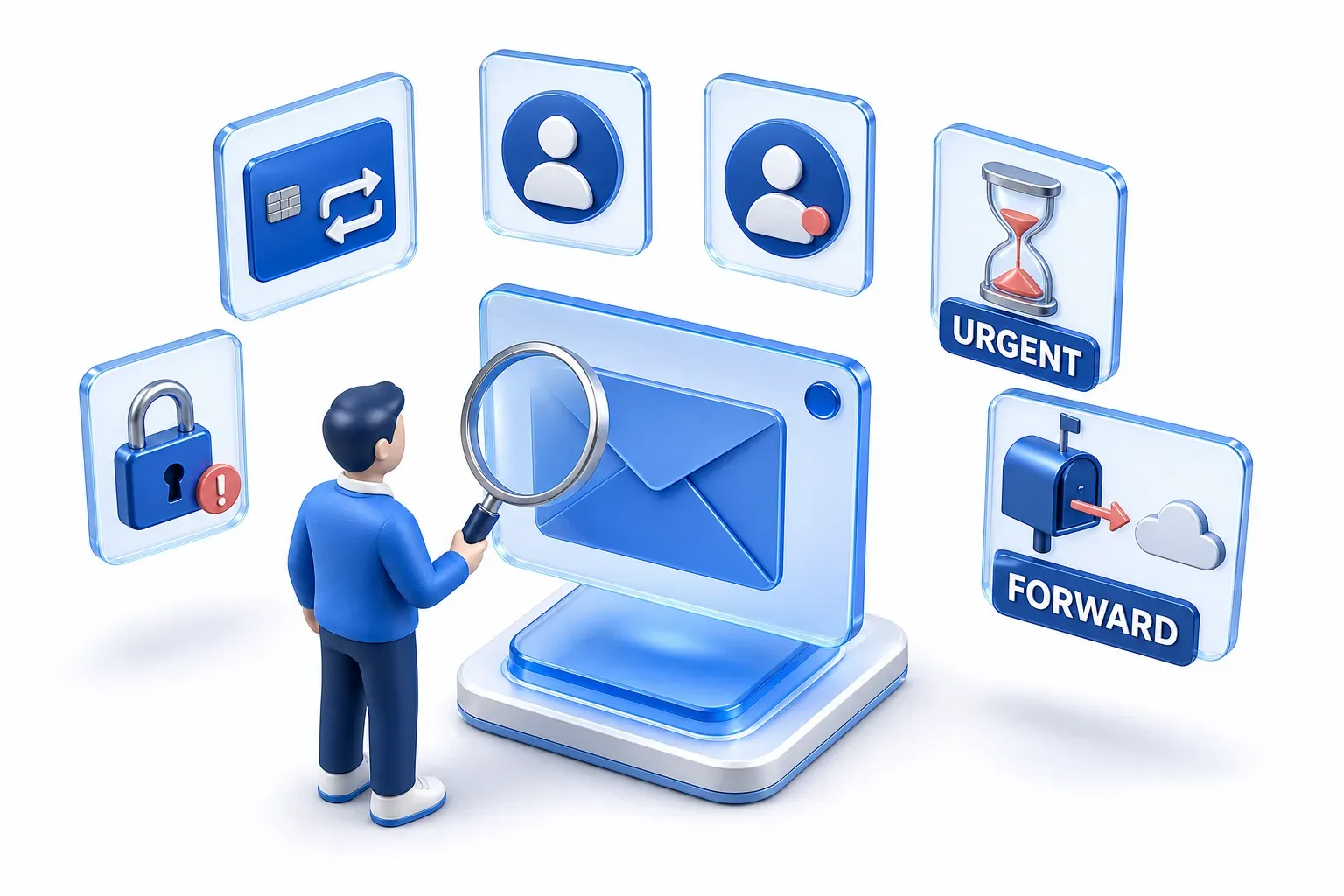
No single sign proves fraud, and genuine messages can show some of them. Each one is a reason to verify the request through another channel before anyone acts.
- A change to payment details: a new bank account, or a message saying a supplier's account has changed.
- A sender that does not quite match: the display name is right, but the full address, the domain or the reply address is different. The FBI advises checking the full email address, and Microsoft describes impersonation as a sender or domain that looks similar to a real one.
- Pressure to move fast or skip steps: MITRE notes that these messages often use persuasive, urgent language to push the victim to act quickly before the malicious activity is detected. A request to bypass the usual approval is a further reason to stop.
- Changes in the mailbox: Microsoft lists rules that forward mail to unknown addresses, rules that move messages into folders such as RSS Subscriptions, newly added external forwarding, and missing or deleted email as symptoms of a compromised account.
- Unusual account activity: Microsoft also lists unexplained lockouts and frequent password changes, and MITRE's detection strategy for Financial Theft includes watching for unusual access to financial applications.
Some signs appear in a message, others in a mailbox's settings, sign-in records or finance systems, so email filtering, finance controls and identity monitoring each see part of the picture.
How can an organization prevent a BEC attack?
The controls below address different routes into a BEC attack, and each has a limit.
Verify and approve
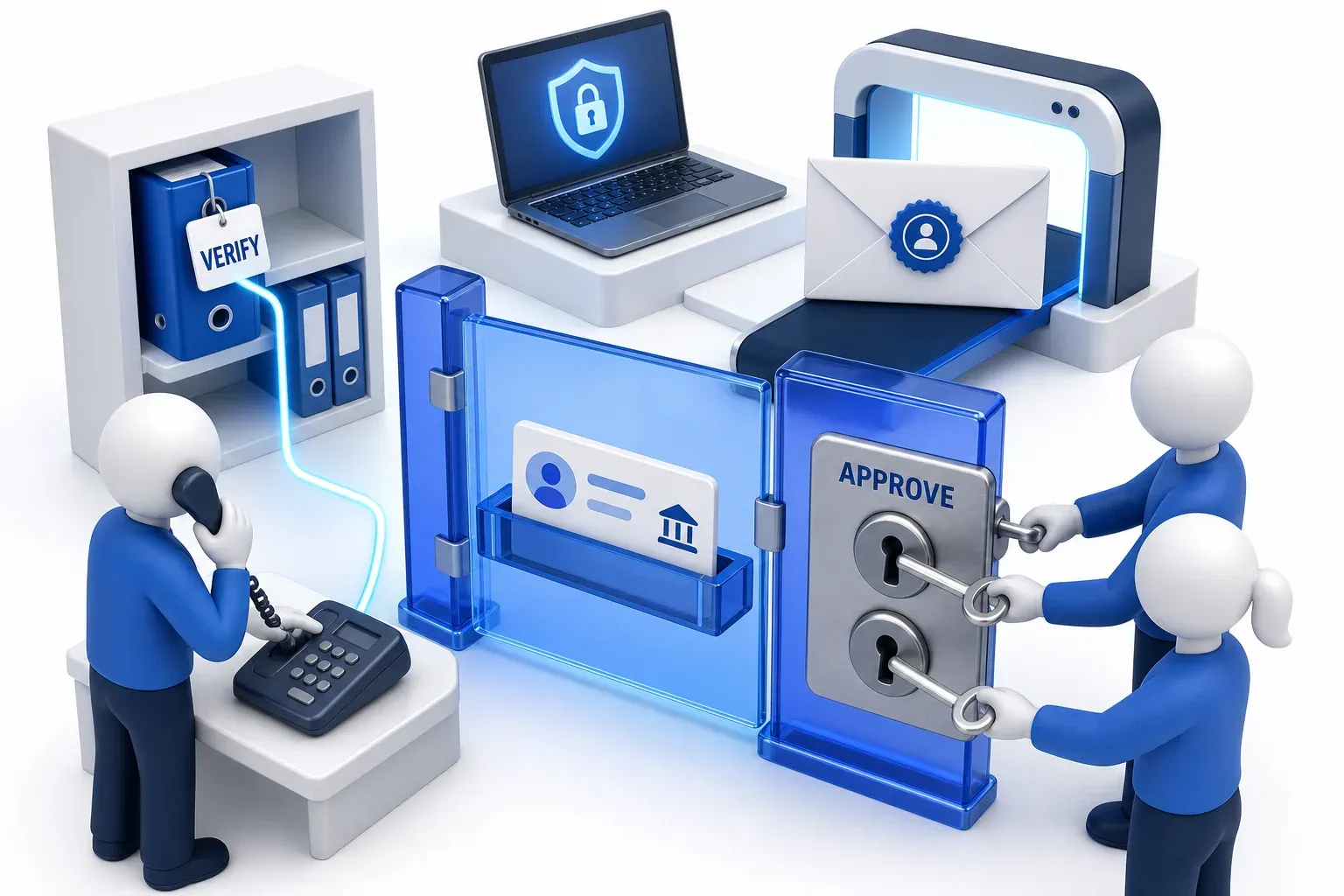
- Verify changed payment details independently: confirm a new account or a changed instruction using contact details already on file, such as a number from an earlier contract, not the email thread and not a number given in the request. A reply in the same thread, or a call to a number from the suspicious message, reaches the person who sent it, so it does not count as verification. The check works only if the details on file are genuine and it happens before the payment.
- Require a real second approval for sensitive changes and transfers: MITRE's mitigation is to limit who has authority to carry out sensitive transactions and to approve payments outside insecure channels such as email. The second approver has to validate the request, not repeat the first person's assumption.
- Use multi-factor authentication (MFA) on email accounts: Microsoft recommends it and says it safeguards against account compromise. It protects the sign-in, so it does not help against impersonation that does not involve the account, and an approval prompt can itself be abused, as the MFA fatigue entry explains.
What DMARC does and does not settle
DMARC, an email authentication standard, checks that the domain in the visible From address matches (is aligned with) a domain that passed one of two other checks: SPF, which tests whether the sending server is authorized for the domain, or DKIM, which verifies which domain signed the message. It helps show whether the From domain is genuine, not whether a payment request is. Microsoft says DMARC helps prevent spoofed senders used in BEC. A message from a lookalike domain the attacker registered, or from a real mailbox that has been taken over, can still pass authentication, because the checks test the sending domain, not the request.
A domain owner's DMARC policy also tells receiving systems what to do with mail that fails:
- None (p=none): suggests no action, and is used to monitor and tune.
- Quarantine: asks the receiver to accept the message but mark it.
- Reject: asks the receiver to refuse the message.
What happens depends on the receiving system, so these are requests, not guarantees. Microsoft recommends moving from monitoring toward reject gradually, testing at each step, because some legitimate mail may be blocked by mistake.
Email security beyond authentication
Microsoft's anti-phishing policies detect spoofed senders, meaning a From address that does not match the domain of the sending source, and impersonation attempts, meaning a sender or domain that looks similar to a real one. Basic features include a safety tip for senders the recipient does not often hear from, and Defender for Office 365 adds protection against user and domain impersonation. Microsoft notes that, with its contact-history settings on, impersonation protection does not work where sender and recipient have already exchanged email, so an independent check of the request still matters.
Finance controls and identity monitoring add visibility beyond the mailbox. MITRE's Financial Theft strategy also covers monitoring email and document systems for fraudulent invoices, vendor impersonation and payment redirection, and finance applications for unauthorized access and rule changes.

What should you do if you suspect a BEC attack?
Speed matters: the IC3 report says that when a fraudulent transfer is discovered, time is of the essence.
- Pause pending payments: hold any payment linked to the request.
- Contact the bank at once through a trusted channel: use its official website or phone number, as the NCSC advises, not details from the suspicious message. Ask for urgent recovery action. The IC3 report advises asking the financial institution to recall the funds and notes that institutions have different policies.
- Tell finance and security: the NCSC advises telling the IT department or person as soon as possible.
- Preserve the original messages and the transaction details: IC3 asks for the full transaction details in a report.
Then report it, according to where you are:
- In the US: file a complaint with IC3, whatever the amount lost. IC3 may be able to help financial institutions and law enforcement freeze funds.
- In the UK: an organization based in the UK can report a cyber incident to the NCSC.
- Elsewhere: report it to your national cybercrime or fraud reporting service.
Recovery is not guaranteed. The FBI says money can be recovered in some cases, and in the case above investigators froze some of the funds.
If a mailbox may have been compromised
Hand it to IT or security at once. Microsoft's guidance for a compromised Microsoft 365 mailbox lists the containment steps: disable the account, or reset its password if it cannot be disabled, and revoke active sessions. It also lists reviewing and removing unrecognized MFA methods and devices, apps that should not have access, and suspicious forwarding or inbox rules. It says not to email the new password to the user, because the attacker may be able to read the mailbox.
Where does BEC appear in MITRE ATT&CK?
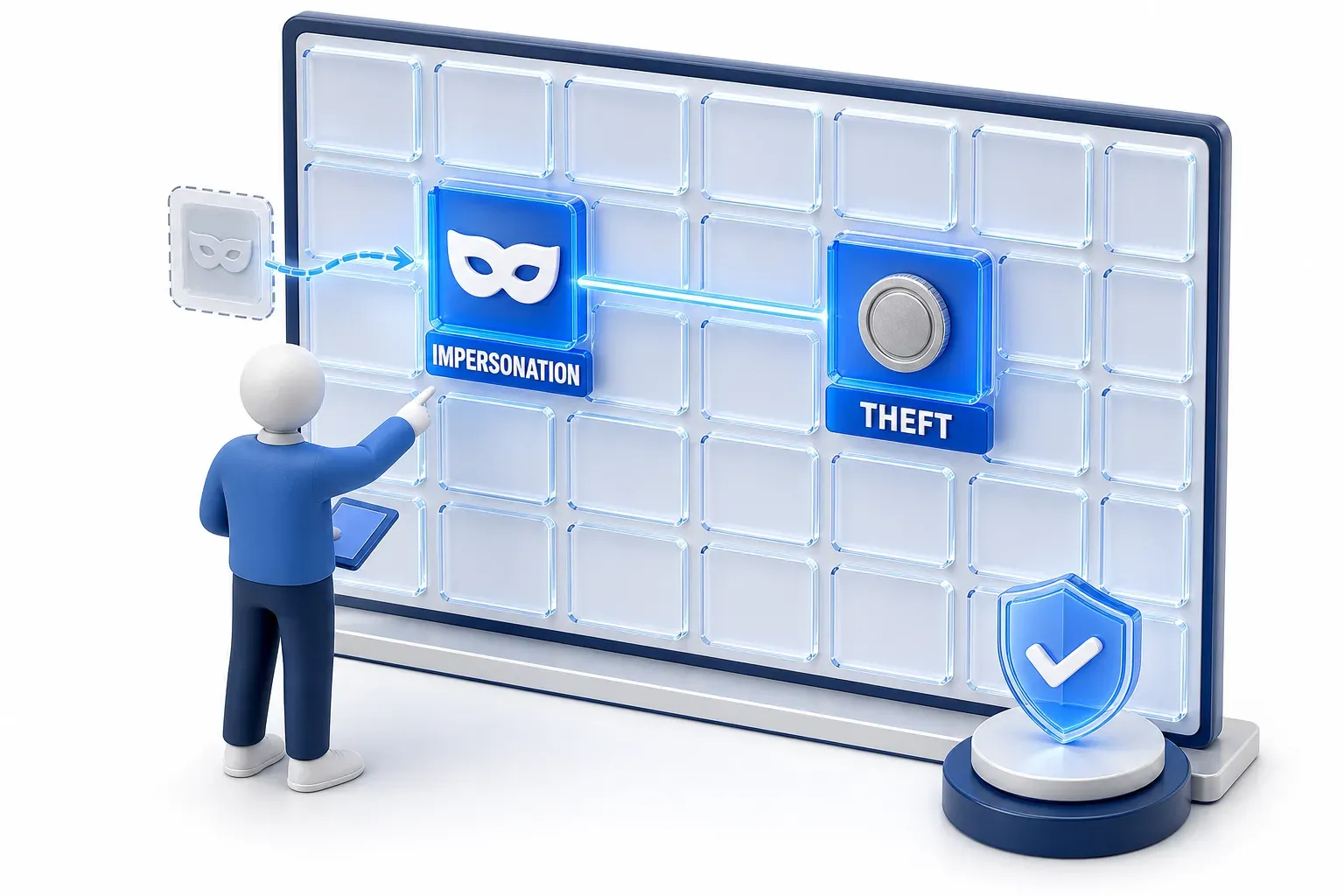
Security teams that use MITRE ATT&CK, a public catalogue of attacker techniques, will find BEC in two places. Impersonation (T1684.001), a sub-technique of Social Engineering created in April 2026, names BEC in its description: in many BEC or email fraud campaigns, adversaries use impersonation to defraud victims. Financial Theft (T1657) lists BEC among the campaigns whose ultimate objective is stealing money, and notes that such incidents can have multiple victims, including the compromised accounts as well as the final monetary loss.
Older reports may cite T1656 for impersonation. MITRE's page for that ID now redirects to T1684.001, so an older reference can still be followed to the current technique.